
Run Smarter, Not Just Harder: A Physiotherapist’s Guide to Healthier Running
Whether you’re lacing up for the very first time, training for your next race, or working your way back after an injury, running is one of the most rewarding things you can do for your body and mind. But as many runners know, it can also be hard on the body when things aren’t quite dialed in.
At FIT Physiotherapy in Newmarket, we work with runners of all experience levels — from weekend joggers to competitive athletes — helping them move better, stay injury-free, and reach their goals. Here are some key tips to help you run smarter and keep doing what you love for the long term.
1. Understand What Your Body Actually Needs to Run Well
Running looks simple, but it demands a lot from your body. Every stride requires a coordinated effort from your hips, knees, ankles, and core. When any one of those links is weak or moving inefficiently, something else has to compensate — and over time, that’s where injuries tend to develop.
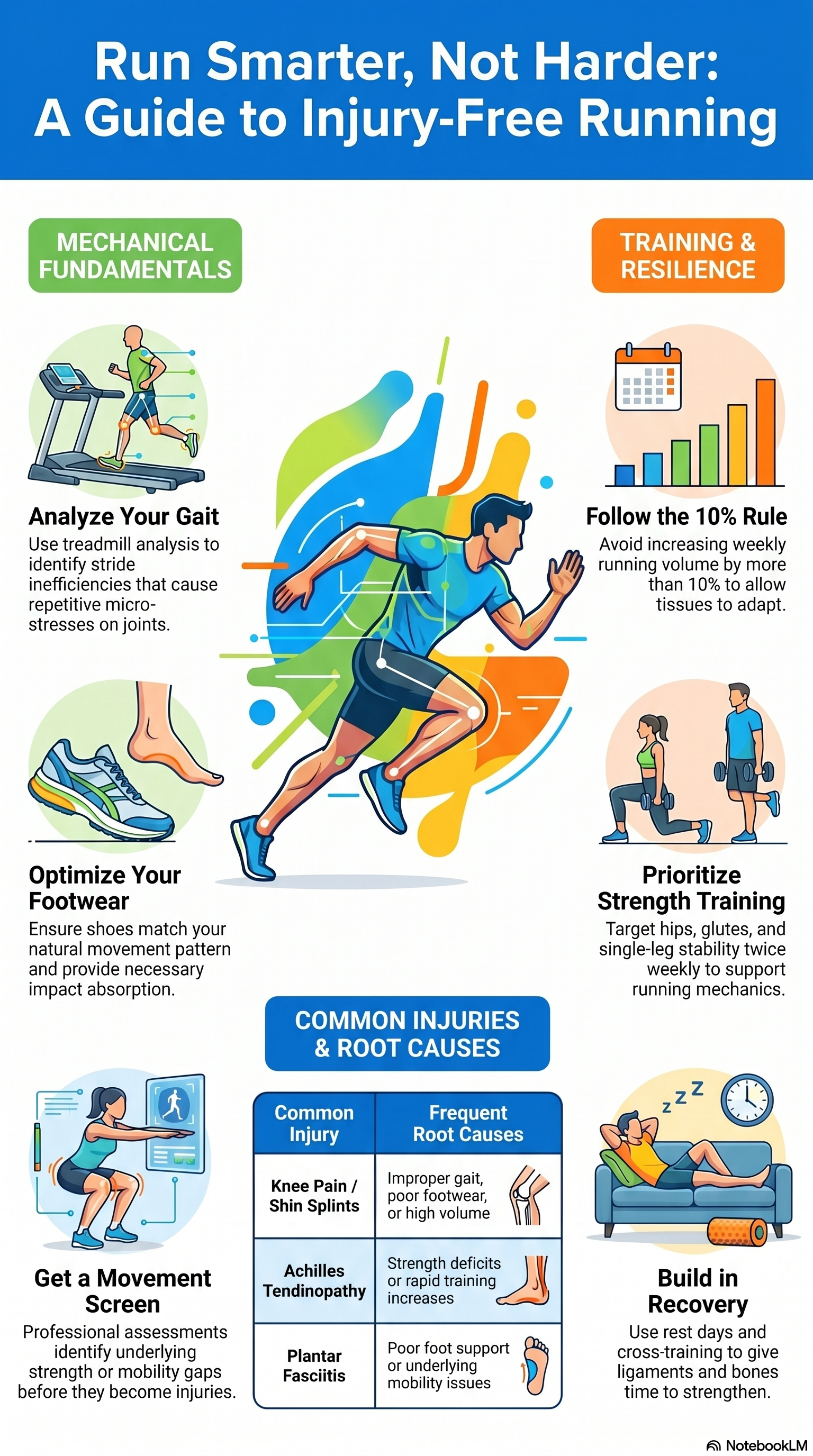
Common running-related issues like knee pain, shin splints, Achilles tendinopathy, and plantar fasciitis often aren’t just bad luck. They’re frequently the result of identifiable and addressable factors: footwear, running gait, weekly training volume, or underlying strength deficits. The good news? When you understand the root cause, you can address it directly rather than just managing symptoms.
2. Don’t Ignore Your Running Form (Gait)
Gait — the way you move when you run — is one of the most important and most overlooked aspects of running health. Small inefficiencies in how you strike the ground, how your hips move, or how your arms swing can add up to thousands of repetitive micro-stresses on your joints and soft tissues with every run.
A treadmill gait analysis is one of the most valuable tools available to runners. It allows a physiotherapist to observe exactly how you move in real time, identify patterns that may be contributing to pain or increasing your injury risk, and give you targeted feedback to improve your mechanics. Even small adjustments to your form can make a meaningful difference in both comfort and performance.
3. Pay Attention to Your Footwear
Shoes matter more than most runners realize. The right shoe supports your foot’s natural movement pattern and helps absorb impact forces effectively. The wrong shoe — whether it’s worn out, the wrong type for your gait, or simply not suited to your foot — can quietly contribute to discomfort and injury over time.
If you’re unsure whether your footwear is working for you, a shoe prescription as part of a running assessment can help match you with the right support based on how your foot moves and what your training demands.
4. Build Your Training Load Gradually
One of the most common causes of running injury is doing too much, too soon. Your cardiovascular system tends to adapt quickly to increased training — but your tendons, ligaments, and bones need more time to catch up. Increasing your mileage or intensity too rapidly is a recipe for overuse injuries.
A good rule of thumb is to avoid increasing your weekly running volume by more than about 10% per week. Building in rest days, cross-training, and recovery runs also gives your body the time it needs to adapt and get stronger.
5. Strength Training Is Part of Running Training
If you only run, you may be leaving yourself more vulnerable to injury than you think. Strength training — particularly targeting the hips, glutes, and single-leg stability — plays a significant role in supporting your running mechanics and reducing injury risk.
You don’t need to become a weightlifter, but incorporating targeted strength work two to three times per week can dramatically improve both your resilience and your performance on the road or trail.
6. Consider a Running Assessment
A running assessment is one of the most effective ways to take the guesswork out of your training. It typically includes a movement screen to evaluate how your body handles the demands of running, a gait analysis, footwear review, and a tailored plan to address any gaps — whether that’s strength, mobility, or form.
Runners with acute or chronic injuries, those looking to prevent future problems, and runners at any stage — from first-timers to race-day veterans — can all benefit from having a clearer picture of where they stand and what they can do to move better.
At FIT Physiotherapy in Newmarket, our physiotherapists work with runners across York Region to help them train smarter, recover well, and get back to the runs they love. If you’ve been dealing with a nagging injury, want to improve your form, or are simply ready to take your running to the next level, we’re here to help.
Ready to run better? Book your running assessment with us today.
About the Author
 Michael Sheng, MSc. PT, BSc. (Hons)
Michael is a physiotherapist at FIT Physiotherapy in Newmarket, Ontario. He graduated from the University of Western Ontario with a Master of Physical Therapy and brings a patient-centered approach to every treatment plan — focusing on education, manual therapy, and exercise to help patients understand their pain and take an active role in their recovery.
With a clinical background spanning sports injuries, tendinopathies, and post-operative rehabilitation, Michael is passionate about helping people of all ages and activity levels move better and feel their best. When he’s not in the clinic, you’ll find him out on the trails — so yes, he practices what he preaches.