What Is Cupping Therapy? What the Marks Mean and What to Expect
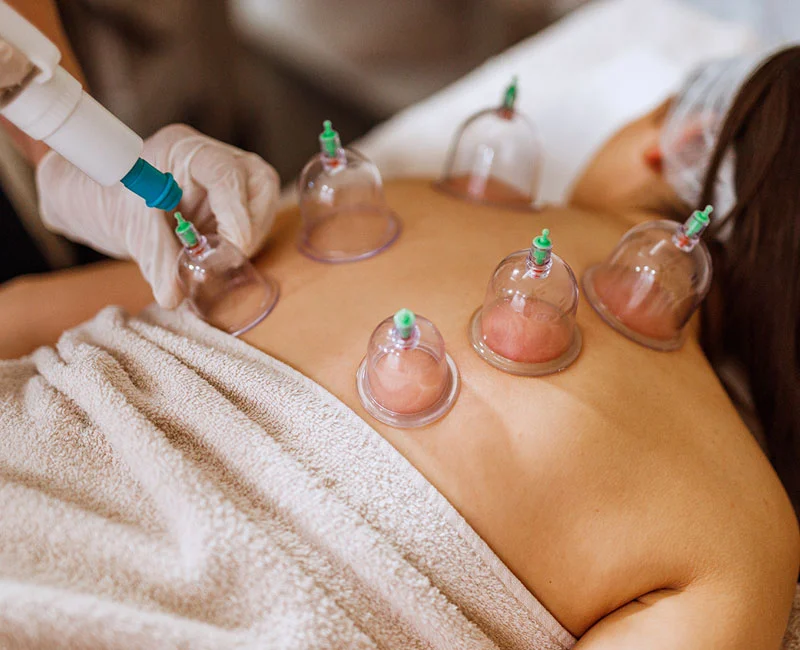
You’ve probably seen them on athletes: perfect circular marks across the back or shoulders. They’re a sign of cupping therapy, a treatment in which special cups are placed on the skin to create gentle suction that lifts the skin and underlying tissue. Cupping is a long-standing part of Traditional Chinese Medicine (TCM) and is commonly used for muscle tension and discomfort. The marks are not bruises from impact. They appear because the suction draws blood toward the surface, and they usually fade on their own within several days to a couple of weeks.
Here’s what cupping is, what the research says, what a session feels like, and what to know before you try it.
Where does cupping come from?
Cupping has been practised for thousands of years in many cultures, and it’s especially well known as part of Traditional Chinese Medicine. In TCM, cupping is traditionally used to promote the flow of blood and qi (energy) and to ease areas of stagnation and tension. Today, it’s often used alongside other treatments, such as acupuncture, for muscle and joint discomfort.
How does cupping work?
During cupping, the practitioner places cups, usually glass or silicone, on the skin and creates a vacuum. The suction gently pulls the skin and soft tissue up into the cup. Cups may be left in place for several minutes, or moved gently over the skin.
The suction is thought to:
- increase local blood flow to the area,
- help ease tight muscles and soft tissue, and
- promote a sense of relaxation.
What do cupping marks mean?
The round marks left after cupping come from the suction drawing blood into the tissue near the skin’s surface. They can range from light pink to dark purple.
A few things to know:
- They’re usually not painful. Most people find the area feels normal, or slightly tender or warm.
- They fade on their own, typically within several days to a couple of weeks.
- Colour varies from person to person and from area to area, and marks often become lighter with repeated sessions in the same spot.
- Plan around events. If you’d rather not have visible marks for a wedding, beach trip or special occasion, schedule your session well in advance.
What does the research say?
Interest in cupping has grown, and so has the research, although the quality of the evidence is still limited. A systematic review of cupping in musculoskeletal and sports rehabilitation found moderate evidence that cupping can improve soft-tissue flexibility, low to moderate evidence that it can reduce low back and neck pain, and a very low rate of adverse events.
In plain terms: cupping may help some people with muscle tension and certain types of pain, and it’s generally well tolerated, but it isn’t a cure-all. It often works best as one part of a broader approach to your health.
What happens during a cupping session?
- A conversation first. Your practitioner asks about your health history, current concerns and goals, and checks that cupping is appropriate for you.
- Treatment. Cups are placed on the treatment area, often the back, shoulders or neck. You’ll feel a pulling or tight sensation that most people find comfortable and relaxing. The practitioner adjusts the suction to your comfort.
- Duration. Cups typically stay in place for several minutes. Cupping may be used on its own or combined with other treatments, such as acupuncture.
- Afterwards. It’s common to feel relaxed. Drink water, avoid very hot showers or saunas right after, and keep the area warm and covered.
Who should avoid cupping?
Cupping isn’t suitable for everyone. Tell your practitioner if you:
- are pregnant
- have a bleeding disorder or take blood-thinning medication
- have broken, irritated or sunburned skin, or skin conditions in the treatment area
- have a fever or infection
- have a medical condition you’re unsure about
Your practitioner will screen for these before treatment.
Cupping at FIT Physiotherapy in Newmarket
At FIT Physiotherapy, cupping therapy is provided by Fanda Wong, R.TCMP, R.Ac, a Traditional Chinese Medicine Practitioner and acupuncturist registered in Ontario. Fanda studied Life Science at the University of Toronto, majoring in Health and Disease, and graduated with honours from the Traditional Chinese Medicine Practitioner program at Humber College. She also completed a Chinese Medicine internship at Hong Kong Baptist University. Fanda often combines modalities such as acupuncture and cupping, and she speaks fluent English and Cantonese.
We welcome patients from across Newmarket and York Region.
Book an appointment or call 905-235-5360.
FAQ
Does cupping hurt?
Most people describe cupping as a strong pulling or tight sensation rather than pain. Your practitioner adjusts the suction to your comfort.
How long do cupping marks last?
Usually several days to a couple of weeks. They typically fade gradually on their own.
Is cupping the same as massage?
No. Massage uses pressure to work into the muscles, while cupping uses suction to lift the tissue. At FIT, cupping is provided as part of Traditional Chinese Medicine care.